
Digital Marketing • November 2, 2026

A practical strategy starts with understanding your current performance, identifying your target audience and choosing.
A business cannot grow through random social media posts, occasional advertisements or disconnected marketing activities. It needs a clear direction. Knowing how to build a digital marketing strategy helps the right channels. Here are seven steps to create a digital marketing strategy that supports measurable business growth.
A digital marketing strategy includes seven key elements:
A strategy explains what a business wants to achieve and why. A digital marketing plan outlines the activities, responsibilities and timelines required to achieve those goals. Individual advertisements, social media posts and email campaigns are the tactics used to execute that plan.
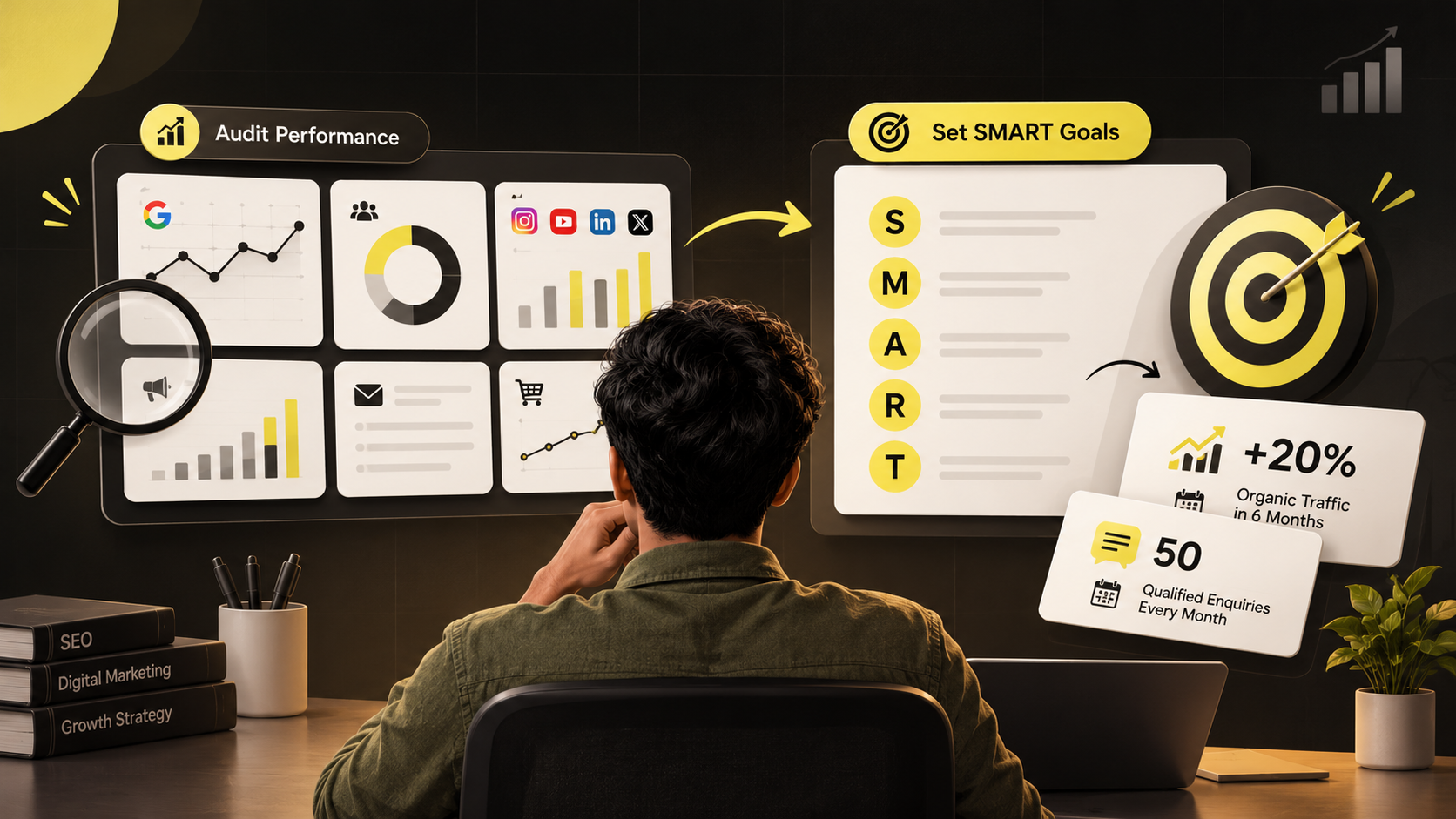
Start by reviewing your existing marketing activities:
Next, set SMART goals that are Specific, Measurable, Achievable, Relevant and Time-bound.
For example, a business can aim to generate 50 qualified enquiries every month or increase organic website traffic by 20% within six months.

A digital marketing strategy works when it reaches people who actually need your products or services.
Research your audience using customer feedback, website analytics, search queries, sales conversations and competitor reviews. Understand their location, age group, interests, purchasing behaviour, problems and expectations.
Also, identify where customers are in their buying journey:
For example, someone searching for a digital marketing agency in Kerala may first read about SEO services, compare agencies and finally request a consultation. Thus, your messaging should address their needs at each stage.

“Why should customers choose your business instead of a competitor?”
Answer this question before selecting marketing channels. Study competitor services, pricing, customer reviews, strengths and communication styles. Identify gaps that your business can address.
Your Unique Value Proposition (UVP) or Unique Selling Proposition (USP) should explain what makes your product or service useful and different.
For example, a digital marketing company may differentiate itself through industry-specific experience, transparent reporting, local market knowledge or a clear focus on qualified leads.
Use this positioning consistently across your website, advertisements, landing pages and social media profiles.
The right digital marketing channels depend on your objectives, audience behaviour, industry and budget. Businesses do not need to invest in every available platform.
| Marketing channel | Primary purpose |
| SEO | Long-term organic visibility and search-driven leads |
| Google Ads | Reaching customers with high purchase intent |
| Social media marketing | Brand awareness, engagement and discovery |
| Content marketing | Educating customers and building trust |
| Email marketing | Lead nurturing and customer retention |
| Influencer marketing | Creator-led discovery and brand credibility |
For a local service business, local SEO, Google Business Profile and Google Ads can help attract customers searching for nearby services.
An ecommerce business may prioritise product SEO, social media advertising, influencer collaborations and email campaigns to increase product discovery and repeat purchases.
Start with two or three suitable channels and expand when you have enough resources and performance data.
Businesses exploring different digital marketing services and their benefits can use this guide to understand how individual channels support business objectives.
For brands considering creator partnerships, this article on influencer marketing strategy and campaign ROI provides further insights.
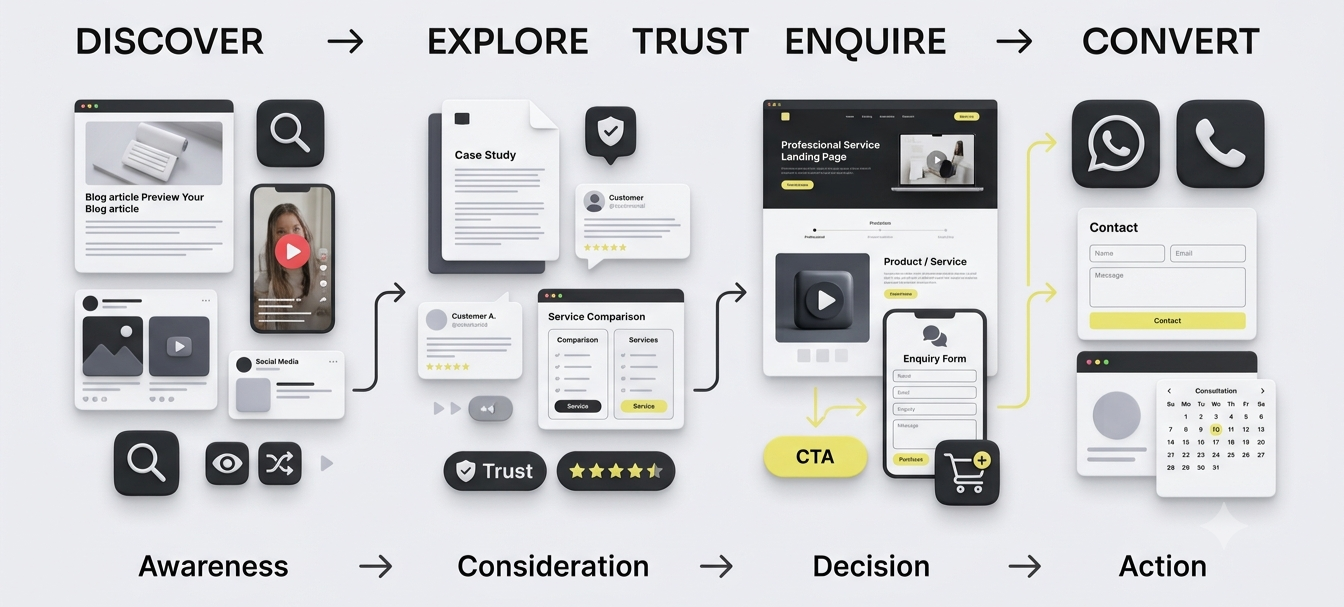
Content should help potential customers move from discovering your business to taking action.
Create educational blogs and short-form videos for awareness. Use case studies, customer testimonials and comparison pages to support consideration. Develop detailed service pages and landing pages for customers who are ready to enquire.
Every important page should have a clear call to action (CTA), such as requesting a consultation, making an enquiry or purchasing a product.
Also, make it easy for visitors to contact your business through simple forms, phone numbers or WhatsApp.
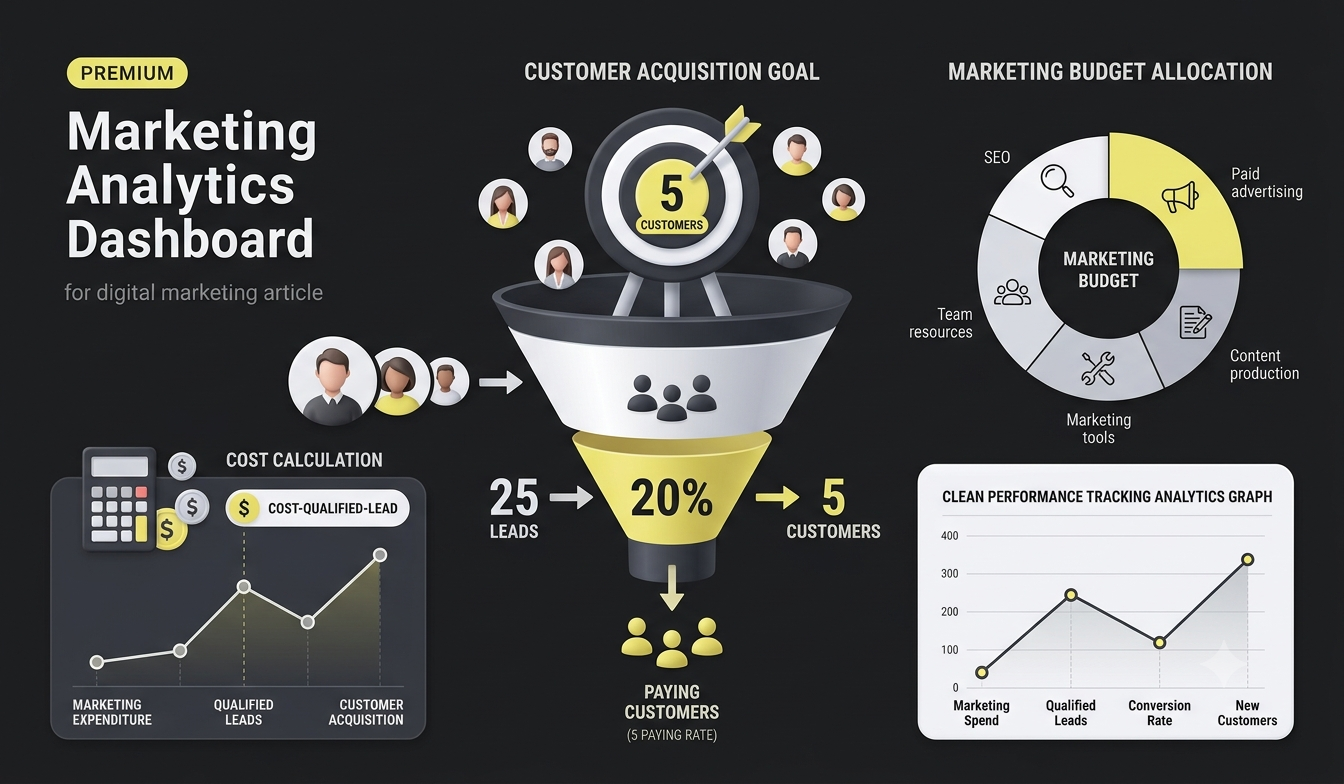
A digital marketing budget should reflect your business goals, expected customer acquisition costs and available resources.
Include advertising expenditure, SEO, content production, marketing tools and team responsibilities when planning your investment.
Consider this example:
A business wants to acquire five new customers. Its historical conversion rate from qualified leads to paying customers is 20%.
Therefore:
25 qualified leads × 20% conversion rate = 5 customers.
The business needs approximately 25 qualified leads to reach its target.
It can then estimate the required marketing budget using its historical cost per qualified lead. This approach connects the digital marketing budget with actual business targets instead of selecting an advertising amount without a clear reason.
A strategy needs regular measurement to understand whether activities generate meaningful results.
Select KPIs according to your objectives.
| Objective | Important KPIs |
| Brand awareness | Reach, impressions and brand searches |
| Website performance | Organic sessions and engagement |
| Lead generation | Total leads, qualified leads and CPL |
| Sales | Conversion rate, CAC and revenue |
| Customer retention | Repeat purchases and customer lifetime value |
Use Google Analytics 4 (GA4) to understand website behaviour and important customer actions. Google Search Console helps monitor organic clicks, impressions, search queries and CTR. CRM platforms and advertising reports provide additional information about enquiries, sales and campaign performance.
Generating more enquiries does not automatically mean generating more revenue. Sometimes, businesses lose potential customers after they have already shown interest.
Check the following before increasing your marketing budget:
For example, improving response times and follow-up processes may help a business convert more of its existing enquiries without immediately increasing advertising expenditure.
The objective is to improve the complete customer journey, not simply generate more traffic or leads.
Once the strategy is ready, divide its execution into manageable stages.
| Timeline | Key activities |
| Days 1–30 | Marketing audit, audience research, goal setting and analytics setup |
| Days 31–60 | Launch selected channels, publish content and test campaigns |
| Days 61–90 | Analyse results, optimise campaigns and improve conversions |
Review performance regularly and adjust your activities according to customer behaviour and campaign results.
Building a successful digital marketing strategy requires more than choosing platforms and running campaigns. It starts with setting clear business goals, understanding your target audience and defining your brand positioning.
Selecting the right marketing channels, creating relevant content and planning your budget help turn these goals into practical marketing activities. Regular performance tracking also shows what works and where improvements are needed.
Most importantly, identifying gaps in lead management ensures that potential customers do not get lost between their first enquiry and final purchase.
With the right strategy, businesses can make informed marketing decisions, improve conversions and achieve sustainable growth.
Haris & Co helps businesses plan and execute result-oriented digital marketing campaigns. Explore our digital marketing services in Kerala to discuss your business growth requirements.
A digital marketing strategy includes business objectives, target audience research, brand positioning, channel selection, content planning, budget allocation and performance measurement.
Choose channels based on where your target customers spend time, what they search for and your business objectives. Start with a few suitable channels and expand based on measurable results.
There is no fixed budget for every business. Your investment depends on industry competition, business goals, advertising costs, content requirements and customer acquisition targets.
Paid advertising can generate enquiries relatively quickly, while SEO and organic content generally require more time. Results depend on competition, website quality, budget and execution.

We're here to partner with you every step of the way.

